

I asked for an illustration of myself leading a workplace dance break. Bob from accounting was doing the robot. The room looked cheerful, people were participating in different ways, and I wanted an image that helped someone imagine bringing TranscenDance™ to their team.
What followed was an unexpectedly contentious meeting between seven versions of me.
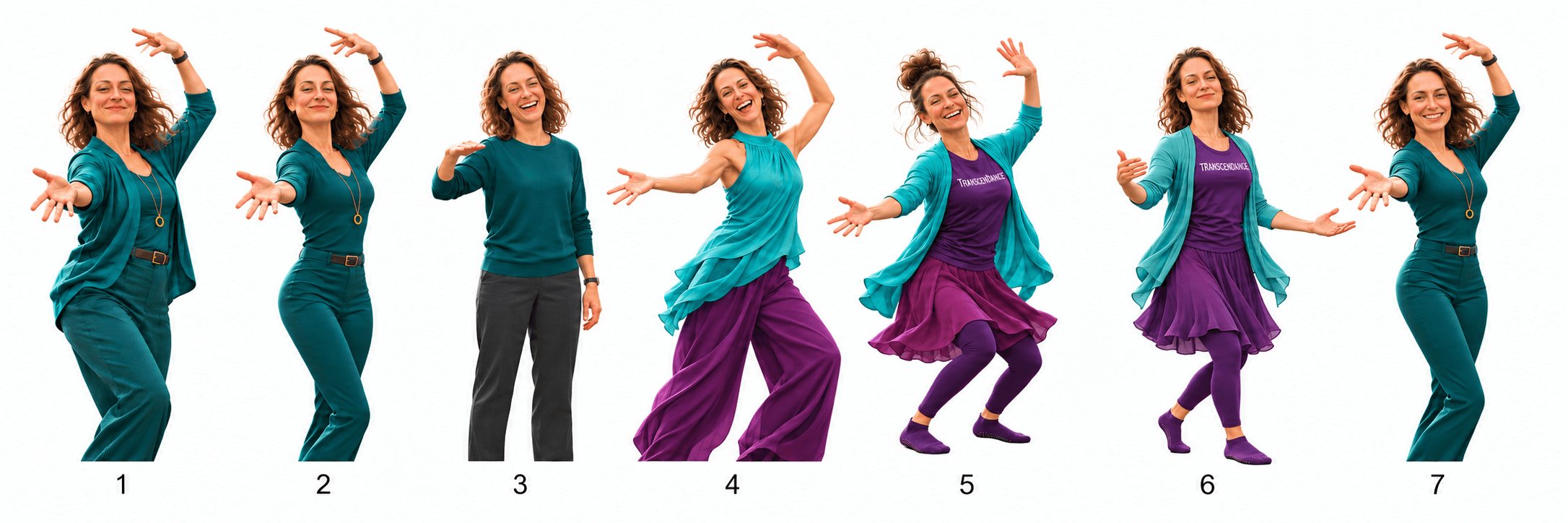
- One had a body that didn’t reflect the weight I’ve lost during a harrowing healing journey. Another had a waist in a cage fight with human anatomy and a smugly punchable face. I requested a promotional image, not an adversary.
- There was a flowing dance outfit I rejected immediately, then reconsidered. Because why not me? That outfit is cute AF and would be beautiful in motion. Apparently, I needed a moment to consider whether I was allowed to look like someone having that much fun.
- Another prompted deep reflection on my dedication to the messy bun. They called me "Crazy Kate" during the mobbing. I rather like that nickname now, and I’m selling tickets to the show. I would still appreciate a bun that suggests effortless chic rather than a prolonged dispute with a pillow.
- Then there was a version wearing something close to my actual dance clothes, which gave me the deeply inconvenient experience of disliking an outfit I already own.
Then there was number three.
Number three wore a teal sweater, gray work pants, and sensible shoes. She looked prepared to circulate the revised agenda.
I reacted strongly to her. There were words directed at the AI that would not have made it into the meeting minutes.
The woman in the work pants
I was mobbed at work. During that experience, I was repeatedly called a “complete hot mess” with a theatrically exaggerated sing-song prosody and extended sibilance.
At the time, I was sporting new rugged clothes that felt appropriate for the office and didn’t require a costume change before cleaning the chicken coop when I got home. I considered this an efficient wardrobe solution. The clothes felt good and wore like iron.
Looking back, I can also acknowledge that grooming had slipped and Complex PTSD was affecting how I cared for myself. Both belong in an honest account of that period.
Neither gave anyone permission to humiliate me.
That distinction matters because I want to examine my own patterns without taking responsibility for somebody else’s conduct.
I can ask what I was neglecting, what I couldn’t manage, and where self-sabotage may have been operating.
I can do that while remaining clear that other adults were responsible for how they treated me.
Seeing the office version of myself brought back more than a clothing preference. I had asked for a picture of the work I’m growing into, and there she was in the middle of it, dressed for a life I associate with considerable pain.
She probably deserved a cup of tea before I started shouting about her durable slacks.
When seeing yourself brings back more than a memory
You might recognize the experience of seeing a photograph and reacting before you can explain why. An outfit, posture, or expression reminds you of a period you thought you had put behind you. What looks ordinary to someone else can carry a very particular history for you.
Complex PTSD can affect how you experience yourself, alongside difficulties managing emotions and maintaining relationships. Some people also experience dissociation—a sense of disconnection from themselves or their surroundings. These are recognized features of trauma-related difficulties, not evidence of poor character. PTSD: National Center for PTSD
Research also connects trauma symptoms with bodily shame. In a study of 380 women with histories of interpersonal trauma, researchers found associations between PTSD symptoms, difficulties regulating emotions, and shame concerning the body and the self. That does not mean trauma makes you unable to judge your appearance. It means the feelings accompanying that judgment deserve attention, too. pubmed.ncbi.nlm.nih.gov
Perhaps you remember What Not to Wear: someone felt reasonably comfortable in their clothes until the dreaded 360-degree mirror gave an outside perspective that challenged that picture. But seeing yourself differently raises questions beyond whether the trousers fit.
- Do you dislike the outfit?
- Does it remind you of someone you no longer want to be?
- Or are you uncomfortable seeing yourself occupy a role you actually want?
Those questions have different answers. You deserve time to discover yours.
Does familiar still fit who you choose to be?
You can keep wearing something because it is comfortable, practical, affordable, or simply already in the drawer. You can also discover that a familiar outfit belongs to a version of your life you’re ready to change.
An unfamiliar style may feel wrong at first because you genuinely dislike it. It may also take a second look before you can imagine yourself enjoying it. You don’t have to turn either response into a verdict on your body or your worth.
The same inquiry reaches beyond clothing. You may know how to be useful, dependable, agreeable, or endlessly productive. Those roles can contain real strengths while leaving little room to ask what you enjoy or want next.
Recognizing that tension gives you something specific to work with. You might change an outfit, decline an obligation, or finally put time toward an interest you keep postponing. You can appreciate what helped you get through an earlier period and still choose differently today.
That is part of the work explored in Well, That Didn’t Work, which brings together The First Step, The Duct Tape Story, and Controlled Demolition. The collection offers a place to examine starting again, self-worth, and patterns that keep costing you—even when you understand them.
Recognizing a pattern is a beginning. What would you like to do differently next time? Well, That Didn’t Work brings together three books about starting again, self-worth, and self-sabotage, giving you a place to examine what keeps happening and consider another response. Explore the collection →
I can live with number seven
Eventually, we reached an image I liked. I looked appropriate and healthy. I could imagine myself wearing the clothes and enjoying the work.
I also realized I might need some yoga office pants. Personal growth occasionally requires an elastic waistband.
The other versions can stay in the story. I don’t have to wear every outfit, defend every reaction, or turn the whole exercise into a verdict on who I am.
Give yourself an evening to look forward to.
I love a massage, but TranscenDance™ ranks a little higher for me. There’s something wonderful about following your own body, enjoying music, and expressing yourself as much—or as little—as you want.
Mellow Wednesday is a chance to care for yourself in the comfort of your own home. I choose the music and guide the experience; you decide how you participate. Move seated, stand, stretch out, or simply listen and imagine movement. We can take it slow.
This isn’t a workout. It’s a celebration of self, with time to move, play, and settle into relaxation.
Join me on Zoom Wednesdays, 8:30–10:00 p.m. Central Time · $20 per person.
Choose your Mellow Wednesday session →
I’d love to see you there. Come as you are—even if your day has been a complete hot mess.


