

There is a reason phrases like "dance like nobody's watching" have survived for generations. Human beings naturally enjoy movement, music, rhythm, and expression.
The interesting question is not why people dance. The more interesting question is why so many adults stop.
Most people do not arrive at adulthood hating movement. They arrive carrying stress, responsibilities, self-consciousness, and years of conditioning about how they are supposed to behave.
Children rarely have this problem. When music starts playing, they move first and think later.
Adults often do the opposite. They think first, evaluate themselves, and then decide whether movement is safe, appropriate, or acceptable.
Many people even use alcohol to lower their inhibitions before dancing. That alone tells us something important about the relationship between movement, self-expression, and nervous system safety.
The desire to move is usually still there. The hesitation often arrives later.
Somewhere along the way, many people learn that movement is something to be judged, graded, evaluated, or compared. What once felt natural starts to feel like a performance.
This matters because modern life asks a great deal of the human mind while often ignoring the needs of the body. Many people spend their days sitting, working, scrolling, caregiving, problem-solving, worrying, planning, and managing responsibilities.
The result is often chronic stress, burnout, overthinking, and a sense of disconnection from the body. The mind stays busy while the body quietly absorbs the cost.
The problem isn't that adults stop dancing.
The problem is that adults stop dancing unless they believe they can do it really well.
We stop singing because we're not singers. We stop drawing because we're not artists.
We stop dancing because we're not dancers. We stop trying because we might look foolish.
Researchers have become increasingly interested in movement because it influences multiple systems at the same time. Movement affects breathing, circulation, balance, attention, mood, and central nervous system regulation.
Music adds another layer. Rhythm and sound influence emotional state, memory, focus, and the body's natural stress response.
This is one reason movement practices continue to be studied in hospitals, rehabilitation programs, neurological clinics, and wellness settings. Researchers are increasingly exploring how movement and music support emotional well-being, quality of life, and stress reduction.
Conscious dance approaches these benefits differently than traditional exercise.
Instead of focusing primarily on performance, calories, speed, strength, or competition, conscious dance emphasizes awareness, self-expression, and connection with the body.
In TranscenDance™, participants move through a guided series of stages designed to help release stress, reduce mental clutter, and support nervous system regulation through breath, music, visualization, and movement. The experience is structured, yet highly personal.
There is no requirement to be a dancer. There is no expectation that you perform, keep up, or move in a particular way.
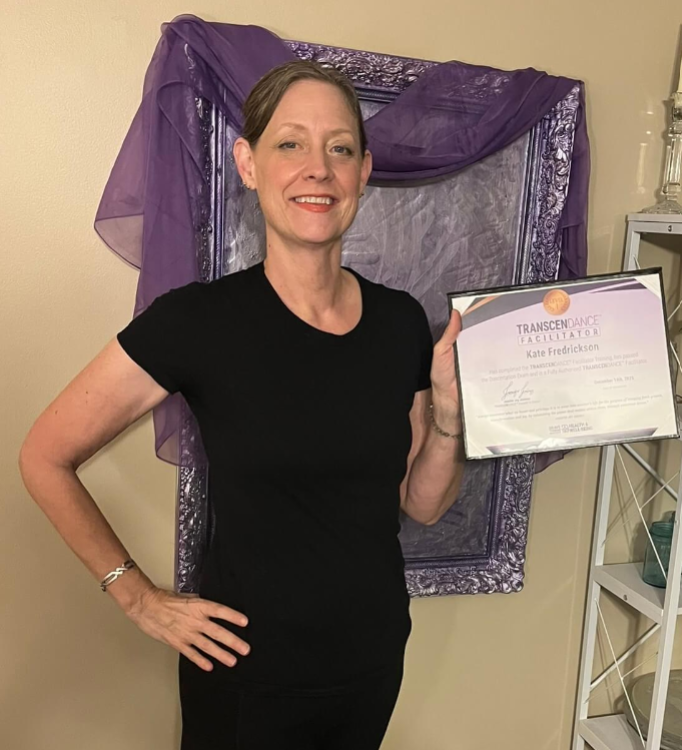
As a trained facilitator, I provide a trauma-aware container designed around choice, pacing, and personal agency. You remain fully in charge of your experience from beginning to end.
Many participants describe TranscenDance™ as a refreshing break from both traditional workouts and endless thinking. For an hour, the goal is not to solve problems but to participate fully in your own experience.
The modern world gives us countless opportunities to observe, compare, evaluate, and perform. It gives us far fewer opportunities to simply participate.
For many people, conscious dance becomes an invitation to step out of spectator mode. It creates space to move, explore, and express without needing to earn permission first.
Sometimes stress needs more than analysis. Sometimes the most productive thing an overthinking mind can do is stop watching life for a little while and start participating in it again.
Curious About TranscenDance™?
If you've been feeling stressed, burned out, stuck in your head, or disconnected from your body, TranscenDance™ may be worth exploring.
TranscenDance™ is a guided conscious dance experience that combines movement, music, breath, visualization, and nervous system-aware facilitation to help participants release stress, reduce overthinking, and reconnect with themselves.
You do not need dance experience. You do not need special clothing, coordination, flexibility, or rhythm.
You simply need a willingness to show up and move in whatever way feels right for you.
Private one-on-one TranscenDance™ sessions are available for those who prefer a personalized, trauma-aware experience with individual guidance and support.
Small group TranscenDance™ sessions are also coming soon, offering a more affordable way to experience the practice in a supportive environment. You remain fully in charge of your level of participation.
To learn more about upcoming sessions, workshops, and Fredhappy resources, join the email list or follow Fredhappy for future announcements.
Your nervous system carries every chapter of your life. Perhaps it's time to give it a chance to move, breathe, and reset.
EMBODY
TranscenDance™ with Kate
Permission to move like a kid again.
Move, play, stretch, sway, dance, or simply follow what feels good. All movement levels are welcome, with a trauma-aware version available. People rave about the safe, judgment-free container for shedding old pressure and rediscovering the simple pleasure of moving freely.
1:1 custom sessions available · 75 minutes


