

When You’re “Fine” and Your Life Says Otherwise
Before I need Fredhappy books, I was fine. I could work, solve problems, help people, and keep going.
I had plenty of evidence that I was functioning, which I mistook for evidence that I was all right. You can keep that arrangement going for years.
You might call it ambition or responsibility. Meanwhile, you’re thirsty as hell and keep volunteering to carry everybody else’s water.
Eventually, you may find yourself exhausted, picking a fight with somebody you love because they asked a perfectly reasonable question while you were holding your entire life together with your fingernails.
There is usually a reason for what we do. There are also consequences. Being hurt doesn’t make it okay to treat people badly, including ourselves.
That is where this work begins.
What are you still spending yourself on?
Isaiah 55 asks why people spend their money on what isn’t bread and their labor on what doesn’t satisfy them. The invitation is to come to the water, including if you have nothing to pay.
What keeps taking your effort without giving you anything that sustains you?
- You might spend hours explaining yourself to somebody who enjoys misunderstanding you.
- You might keep postponing something you want because trying would expose you to an answer.
- You might work until you’re too tired to notice that the life you’re paying for barely has you in it.
Self-sabotage can look remarkably respectable
I tried to prove I was healing by being productive. A finished book could tell me I’d finished a book. I wanted it to certify that I was safe, capable, recovered, and now officially allowed to enjoy my life. That was an unreasonable workload for a PDF.
You can understand a pattern and still keep feeding it. Eventually, the question becomes what you’re willing to do differently with the next hour.
Dig somewhere new
In 2 Kings 3, three armies are stranded without water. Elisha calls for a musician, then gives an instruction: make the valley full of ditches. They’re told water will come even though they won’t see wind or rain.
I keep coming back to the preparation. They have something to do before they have reassurance.
We often know how to dig the old ditch. We can rehearse an argument, anticipate rejection, or find another reason to put ourselves last without even getting out of bed. We’ve practiced.
A new ditch takes deliberate work. You leave time between getting angry and sending the message.
- You make the call you’ve been avoiding.
- You give a dear friend some of the attention you’ve been giving someone you can’t stand.
- You put a price on your work and make it possible for somebody to buy it.
None of those choices guarantees the outcome. Each gives something different a chance to happen.
The biblical story doesn’t end neatly. Water arrives, but the battle brings devastation and ends with a child’s sacrifice and the armies withdrawing. It is a terrible ending.
I won’t turn it into a cheerful business lesson.
Religious trauma and the refusal to tidy the ending
How many of us have religious trauma? The kind that trained us to turn every hard story into a lesson with a bow on it, or to distrust our own reading because someone with authority once told us what the text “really” meant and what it required of us.
That is why the terrible ending in 2 Kings 3 matters.
The chapter does not resolve into comfort or clear moral victory. Even mentioning the text to anyone whose body still flinches at forced positivity from religious sources feels like a betrayal, frankly.
We can take something usable from a passage without sanding off its edges. Keep the ditches and the water without pretending the rest of the story was fine.
That distinction is not academic. It is the difference between a text that can be approached and a text that has to be managed so it does not re-injure.
What I take from the ditches is narrower: you can prepare for what you need while the larger situation remains unresolved. You may never get an explanation that satisfies you. You still need water.
Let the past die
In that same way, Psalm 58 is not subtle. It names cruelty, compares it to venom, and asks God to break the teeth of those doing harm.
Nobody appears to have suggested a gratitude journal.
There is room to want the harm stopped. There is room for consequences.
People don’t become entitled to your forgiveness, your company, or another chance because they’d prefer a more comfortable ending.
But the past can keep collecting long after the event. It gets your morning, your attention, and the conversation with someone who actually likes you.
Letting the past die can mean keeping the record while giving up today’s rehearsal. You can remember what happened and decide that you have spent enough of this afternoon there.
That may take practice. Some days you’ll catch yourself halfway through the argument. You can still put down the doomscroll on your phone and do something you wanted to do before the memory arrived.
How to update your algorithm
Your feed learns from what you keep watching. Your habits get practice from what you keep doing. Neither needs another three hours of evidence that people can be awful.
Notice what happens after you take something in. Did that account help you understand your situation, or have you spent forty minutes furious at people you’ve never met?
Keep what helps. Mute what keeps dragging you back. You can care about what happened without attending every available reenactment.
Then give your attention somewhere worth going.
The same applies to what you tell yourself. “I always ruin everything” gives you nowhere to go. “I sent that message because I couldn’t stand waiting” gives you something specific to work with. Next time, you can write the reply and leave it unsent while you decide whether it will help.
Speaking life needs somewhere to land. If you want friendship, make room for contact. If you want your business to support you, give someone a clear way to buy. Let the next action support the life you keep saying you want.
You’re digging a new ditch. Give the water somewhere else to go.
How to actually speak life over your life
If you’ve spent years saying “I’m such an idiot” every time you drop something, speaking kindly to yourself may feel ridiculous. Someone else’s insult can come out of your mouth so easily you forget you learned it somewhere.
Listen to what you say when you’re frustrated. “Nothing ever works out for me” is a hell of an instruction to carry into the next thing you try.
In The Oldest Song, I connect intention, spoken words, and action. Give your attention a direction, say what you mean, and do something that supports it. You can use that as a spiritual practice in the middle of an ordinary, difficult day.
Pay attention to the facts, but dig the ditch toward where you want to live, shovel by shovel. You don’t have to believe everything will work out before you take a baby step.
“I’m learning to let good things happen in my life” is something you can mean today.
Then, speak for what you want to grow. “I make useful things. I want them to reach the people who need them, and I welcome being paid for my work.”
Say it aloud. You can mean it even if your voice shakes. Give the words a place in your day.
- Put the offer where someone can find it.
- Make the call.
- Send the invoice.
If you’re speaking life over a friendship, contact your friend. If you’re asking for peace at home, pay attention to how you speak to the people who live there—including yourself.
You can make this a blessing. “May this home be a place where we can rest. May my work reach people it can help. May I recognize the good that arrives and let myself receive it.”
Use language you mean. Use what you understand.
And when the old sentence comes back, answer it without starting another fight with yourself. “I knew I’d screw this up” can become “This needs another attempt. I can decide what to change.” You’re allowed to correct your own narration.
- I speak life over my business because I want it to thrive.
- I speak life over my readers because I want these pages to be worth their money and their time.
- I want someone to use the work and have a better afternoon, a more honest conversation, or a choice they couldn’t see before.
You can bless a life that still needs work. You live here now. Say something you want to help make true, then give it some of your attention.
Self-sabotage can look remarkably respectable
You can understand a pattern and still keep feeding it. Eventually, the question becomes what you’re willing to do differently with the next hour.
Isaiah ends with a changed landscape: fir and myrtle growing where thorns and briers had been. I love that image.
The ground that hurt to walk through can hold something else. For me, some of the old thorns have become useful pages. That doesn’t make what happened necessary or good. It means I get to decide what I make from what remains.
Well, That Didn’t Work brings together The First Step, The Duct Tape Story, and Controlled Demolition. It starts with noticing what’s happening and goes deeper into the patterns that keep costing you. All three are in one $7.99 digital collection.
You don’t have to call yourself a survivor or arrive with a tidy explanation. “I keep doing this, and it’s costing me” is plenty to begin with. You’ve already learned how to get through a great deal.
Some of that effort deserves to go toward a life you actually want to be here for.
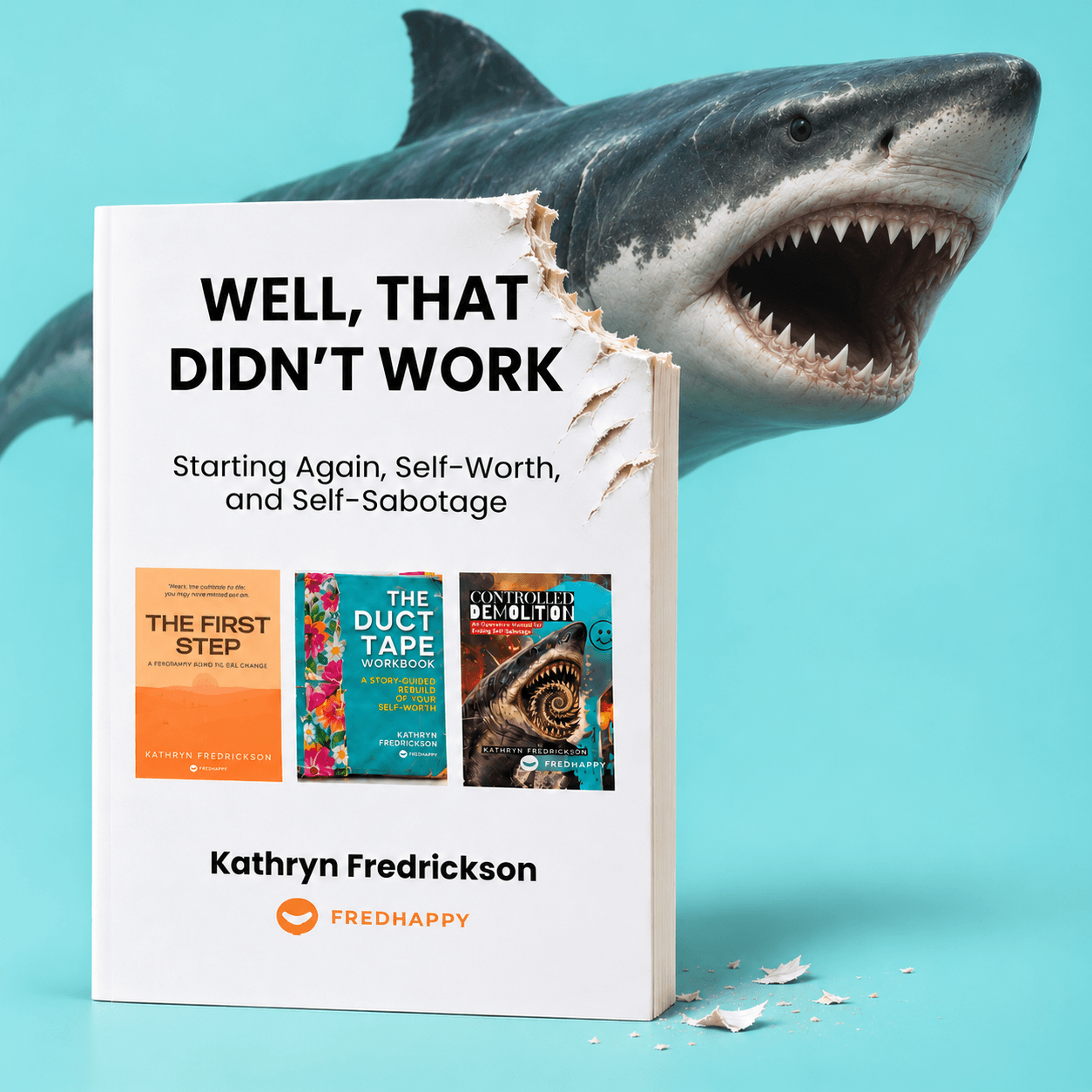
Well, That Didn’t Work
Starting Again, Self-Worth, and Self-Sabotage
Ever catch yourself picking a fight when what you really want is an honest answer? The First Step, The Duct Tape Story, and Controlled Demolition give you somewhere to start. All three books come in one 93-page PDF.


