

I have a great deal of respect for Robert Greene.
In many ways, I think he wrote one of the most important books of the modern era.
Not because The 48 Laws of Power teaches people how to become manipulative.
Because it teaches people to stop being naïve.
Greene spent years working dozens of jobs, watching talented, intelligent, well-intentioned people get blindsided by politics they did not understand. His work became an operational guide to power, status, reputation, influence, court dynamics, and the gap between how people say the world works and how it actually works.
He mapped the game.
What he did not spend much time exploring was what happens when the game enters the attachment system.
That is where Weaponized Limerence begins.
Robert Greene explains the game. Weaponized Limerence explains why the game gets into your body.
The Missing Law: Belonging and the Attachment System
Most people think power is about authority.
Titles.
Money.
Status.
Control.
Those matter. But belonging may be even more powerful.
What fascinated me while writing Weaponized Limerence was realizing that the deepest wound was often not attraction.
It was belonging.
The attachment object was frequently embedded inside something larger:
A workplace.
A mission.
A leadership identity.
A team.
A role.
A future.
A promise.
The attachment system became organized around access to a field of belonging.
That changes everything.
Where Weaponized Limerence Intersects with the 48 Laws of Power
The overlap is surprisingly strong.
Several of Greene's laws describe the external mechanics of what many people experience internally.
Law 3: Conceal Your Intentions
Ambiguity creates room for projection.
When intentions remain unclear, the target begins doing interpretive labor, searching for meaning where clarity should have existed.
Law 11: Learn to Keep People Dependent on You
Intermittent warmth, selective attention, and inconsistent access can create dependency without requiring overt control.
Law 33: Discover Each Person's Thumbscrew
Attachment vulnerabilities matter.
Belonging needs matter.
The need to feel seen, valued, chosen, respected, or included can become leverage.
Law 43: Work on Hearts and Minds
Mirroring is powerful because it creates recognition.
The nervous system reads synchrony as safety.
What feels like profound understanding may actually be selective attention directed toward attachment needs.
Law 48: Assume Formlessness
Ambiguity protects the system.
Plausible deniability allows behavior to remain difficult to name, difficult to challenge, and difficult to prove.
When Power Games Hijack Attachment
Greene describes the game.
Weaponized Limerence describes what the game feels like from inside the nervous system.
Greene explains power.
This book explores what happens when power intersects with attachment, belonging, identity, and the body's survival systems.
The result is not merely political. It becomes physiological.
The person begins scanning, rehearsing and monitoring. They try to solve an uncertainty that was never designed to resolve cleanly.
That is where many people become trapped. Belonging is one of the deepest systems human beings possess. Weaponized limerence is targeted predation...not weakness or foolishness.
The Hidden Belonging Wound Behind Limerence, Power, and Identity
Human beings will tolerate extraordinary levels of confusion, ambiguity, exclusion, self-editing, and self-betrayal if they believe belonging is on the other side.
This should not surprise us.
Across anthropology, attachment theory, social neuroscience, and evolutionary psychology, belonging is not treated as a luxury. It is treated as a survival need.
For most of human history, exclusion from the group carried real consequences:
- Loss of protection
- Loss of resources
- Loss of status
- Loss of mating opportunities
- Sometimes death itself
The human nervous system evolved inside tribes, coalitions, villages, kinship systems, and social hierarchies. We are wired to monitor belonging because belonging once determined survival.
Modern organizations, friend groups, families, faith communities, and social networks operate on different terrain, but the underlying circuitry remains remarkably old. The body still reacts to exclusion, status threat, uncertainty, and conditional acceptance as meaningful events.
This is why people can remain attached to environments that are confusing, unfair, or psychologically costly. They are not merely pursuing affection. They are often pursuing belonging.
Robert Greene taught a generation how to recognize power.
I became interested in different questions:
What happens when power enters the attachment system? What happens when belonging itself becomes leverage?
That question became Weaponized Limerence. I pray to God this book helps people see the pattern before they get badly hurt.
PROTECT
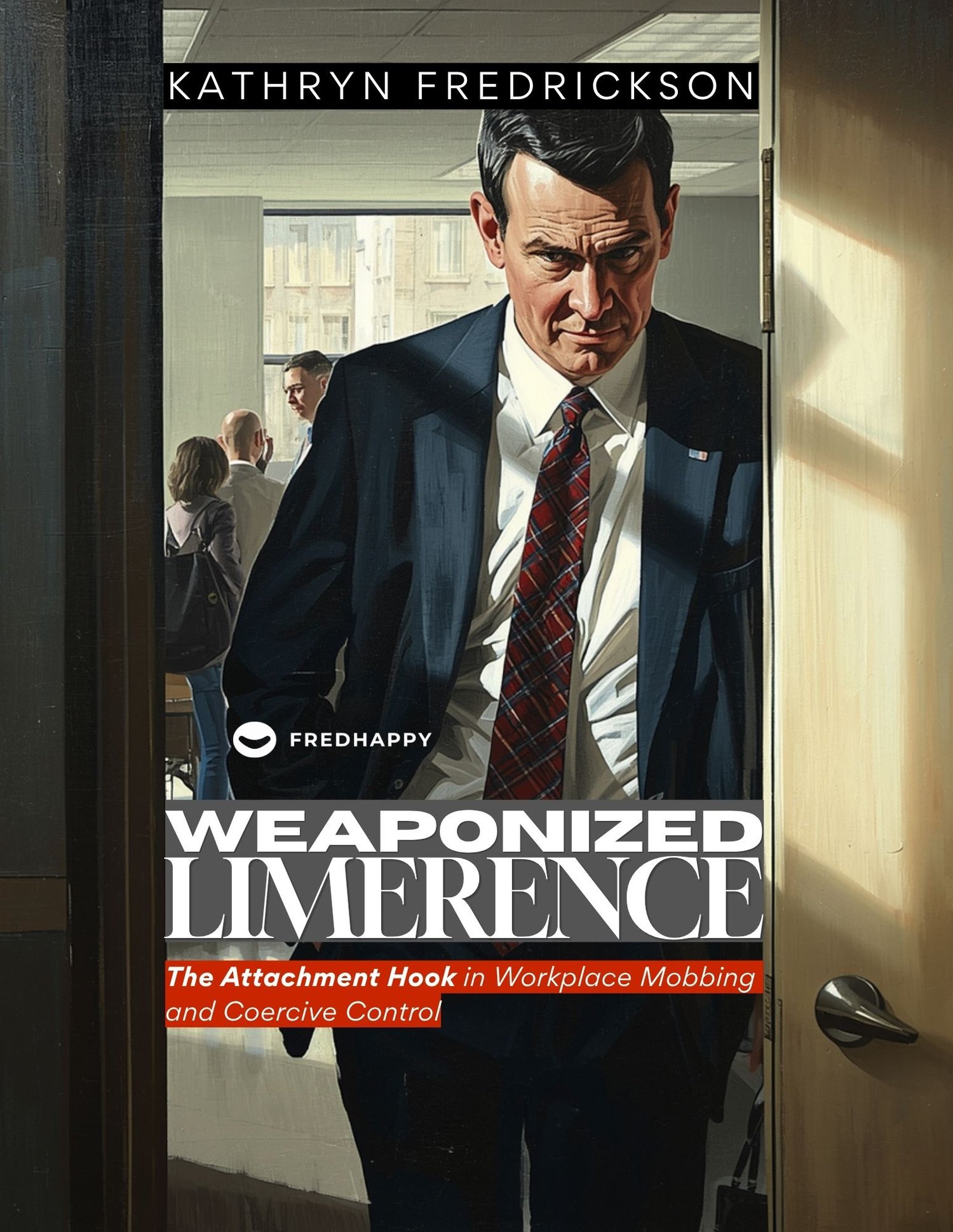
Weaponized Limerence
Weaponized Limerence examines what happens when attraction, ambiguity, intermittent access, and asymmetrical power become tools of control. It maps the difference between private longing and engineered attachment, then turns toward reclaiming clarity, authorship, and choice.


