

Why I Wrote What Work Becomes
The years keep coming, and the knees let him know it first. Not all at once. Just a stiffness when he stands too quickly, a delay before the body agrees to move. The crown has gone bright under the bathroom light. The ballcaps have multiplied—hooks full of them now, more than he remembers buying.
Some months, the truck payment sits a little heavier than it should.
He keeps it all moving.
Work. Bills. Showing up. Saying the right things. Not saying the wrong ones. There’s a rhythm to it now. A way to carry the day without dropping anything important.
It feels like looking through compound eyes.
The smoker had gone out twice before he reached the first hive. Not because the fuel was wet, but because he wasn't paying attention.
The maples were already pushing green. Redbuds were beginning to show themselves along the fence lines. The kind of spring morning beekeepers spend all winter imagining.
He stood there looking at the beehive boxes.
Five years of trying.
Five years of packages, queens, treatments, feeders, advice, books, webinars, mentors, opinions, mistakes, optimism, and dead bees.
The first year he lost them to mites. The second year to a winter so mild the cluster never settled properly.
The third year to something nobody could explain. The fourth year was supposed to be different.
Everybody always says that. He pried up the outer cover. No sound.
That was the first thing. No warning buzz. No irritated guard. No movement rising to meet him.
Just silence.
The kind that arrives before the mind catches up. The lid came free and the inner cover lifted.
Still nothing.
The comb sat exactly where he had left it months before.
Beautiful. Perfect, even.
Frames drawn straight. Honey still capped. The architecture intact, but the city gone.
He pulled a frame and the cells were empty. Not robbed, or torn apart. Just empty.
A cathedral after the congregation leaves. The sort of thing that hurts because it refuses to look damaged.
He stood there holding a thousand dollars' worth of accumulated hope and failure disguised as a wooden rectangle.
Behind him, the pasture was waking up. In front of him, a dead colony.
The bees had not survived to see the flowers.
He looked down into the box one more time, and breathes a very deep sigh. Because he had already ordered four nucleus colonies.
The invoices were paid. The pickup date was on the calendar. The equipment was stacked in the garage.
The man standing over a dead hive was already preparing for another season.
That was the part nobody talks about. Not the loss. The return. The willingness to begin again while still disappointed.
To place another order. To lift another lid and believe one more time.
Most people think injustice breaks a person when something is taken.
Often it breaks them when they discover how much effort they invested in something that never had a chance to become what it promised.
The hive did not know any of this, and the comb did not care. The flowers would bloom anyway. Spring was arriving with or without his permission.
So he set the frame back into the box, closed the lid and picked up the smoker. And walked toward the next hive.
Inside Injustice: What Work Becomes
Injustice: What Work Becomes continues inside the hive. Here’s a look inside the story.
ADVICE. What Work Becomes
False Spring
Warmth enters the wood before the field can answer it.
It comes thin at first, a loosening along the outer bodies where cold has held us to
ourselves for months. Then more of it. Not enough to trust. Enough to alter the work.
The comb nearest the center softens by degrees. Stores shift from hard to willing. The queen lengthens her going.
We widen.
Not much. A little ring at first around the sealed brood. Then another. Heat must be fed to what has opened. The white bend of larvae increases cell by cell, mouth after mouth laid down into wax. They cannot warm themselves. They do not know weather. They know only feeding and enclosure. Their hunger is exact. It arrives on time. It repeats. It does not care whether the ditch is giving henbit yet or whether the maples have broken enough to dust the legs.
Warmth before forage is a debt.
We spend to hold the brood at brood heat. We eat what was flower and sun and distance last year. The sealed stores thin at the edges. The cappings come away in flakes. The cells open. Head in. Tongue working. Pass it. Turn it. Feed the nurse. Feed the larva. Feed the center. Fan where damp gathers. Shift where chill enters. Cluster tighter at night. Loosen by noon. Tighten again when the dark takes the board and the roof gives back no heat.
The day advertises more than it provides.
Continue Injustice: What Work Becomes
The field is waking. The colony is spending what it stored. And false spring has only begun.
Continue the story in Injustice: What Work Becomes.
PROTECT
INJUSTICE: What Work Becomes
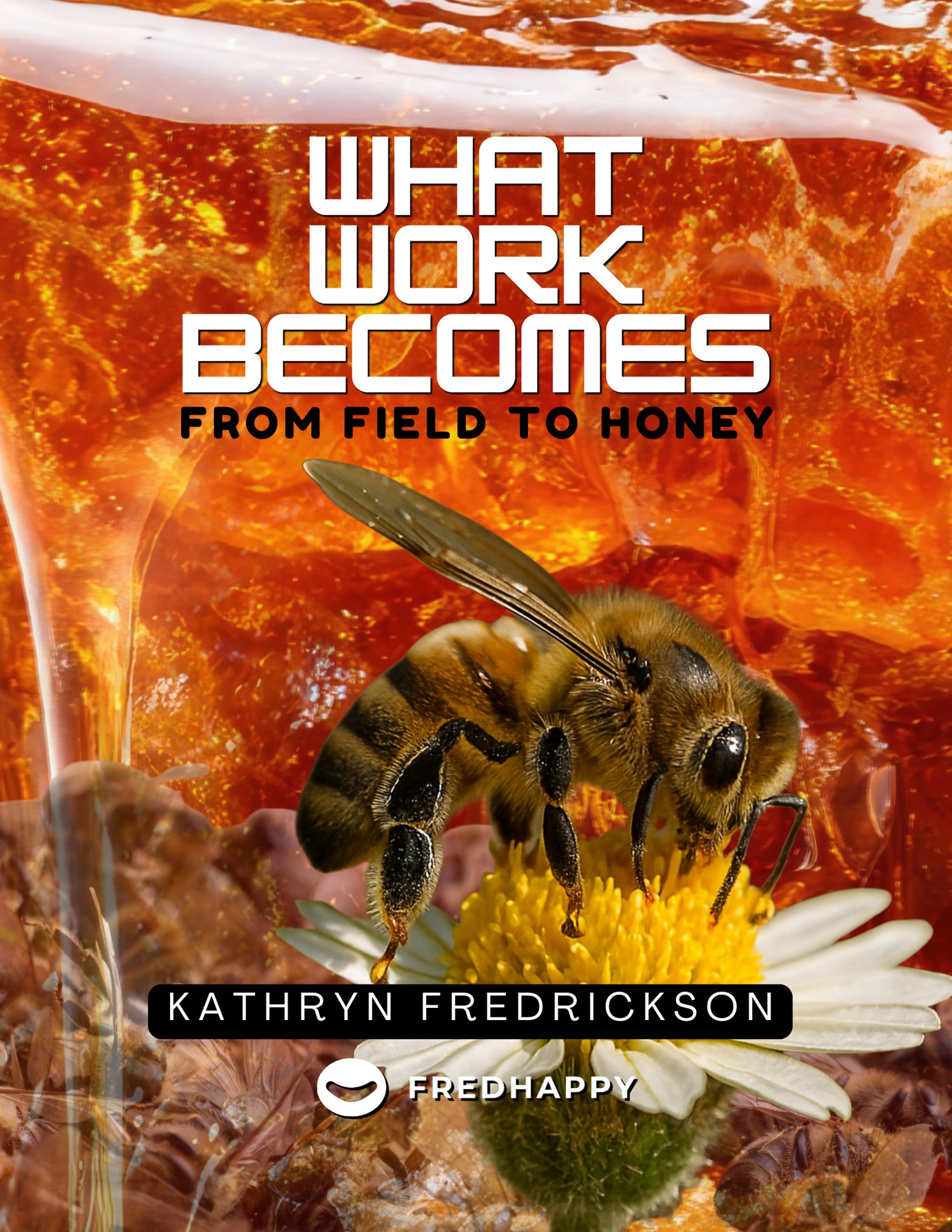
From Field to Honey
What happens when the energy for making must go into defending? Told from within a honeybee colony, this work of literary nonfiction explores how pressure changes work, revealing the hidden labor of preservation, adaptation, and building something that lasts.


