

Why I Wrote This
COLD OPEN
A woman sits down with a beautiful sandwich. There is a pickle, a tiny bag of chips and a moment of peace.
The front door explodes open.
NEIGHBOR
I need a favor.
WOMAN
No.
NEIGHBOR
Great. Here's my ferret.
The ferret is handed over.
WOMAN
Why do I have your ferret?
NEIGHBOR
I knew you'd understand.
The neighbor leaves.
The woman stares at the ferret.
The phone rings.
COUSIN
Can you settle an argument?
WOMAN
What kind of argument?
COUSIN
Grandma says people-pleasers can hold grudges.
WOMAN
Why am I involved?
COUSIN
You're good with trivia.
WOMAN
Debatable.
Click.
A man appears outside the window.
WOMAN
I don't know who that is.
MAN
You're the wise one.
WOMAN
Who decided that?
The door bursts open again.
FRIEND
Emergency.
WOMAN
What happened?
FRIEND
I bought a kayak.
WOMAN
That's not an emergency.
FRIEND
I hear what you're saying, but I need solutions.
The ferret escapes. It is finally found halfway down the street.
WOMAN
THAT IS NOT EVEN THE SAME FERRET.
FREEZE FRAME
The Hidden Cost of Weak Boundaries, Overfunctioning, and Becoming Everyone's Backup Plan
At some point, many capable people accidentally become the Department of Other People's Problems.
Nobody applies for the position. Nobody gets paid for the position. Nobody remembers accepting the position.
And yet somehow they become responsible for solving family conflicts, managing workplace drama, mediating friendships, absorbing emotional labor, handling emergencies, and carrying responsibilities that were never formally assigned to them.
One day they look around and realize they are holding everybody's ferret. Metaphorically speaking.
The problem is not that these people are weak. In many cases, they are the strongest people in the room. They are dependable. Resourceful. Responsible. Conscientious.
They are also often exhausted.
The role rarely arrives all at once.
One favor becomes another. One exception becomes a pattern. One small accommodation becomes an expectation.
Over time, other people begin treating your capacity as a public utility.
Your availability becomes assumed. Your attention becomes accessible. Your energy becomes shareable. Your time becomes negotiable.
Eventually, everyone knows where to bring their burdens.
The result is not simply stress. It is exposure.
Every unnecessary responsibility consumes attention that could have been invested elsewhere.
Every unexamined obligation pulls resources away from your own goals, relationships, health, creativity, and recovery.
Protection is not about becoming selfish. Protection is about becoming accurate.
It is the ability to distinguish between compassion and responsibility.
Between support and rescue. Between helping and carrying. Between what belongs to you and what belongs to someone else.
Many people spend years trying to answer the wrong question:
How do I manage all of this better?
A more useful question might be:
Why does so much of it have access to me in the first place?
If you find yourself chronically exhausted, resentful, overwhelmed, or responsible for problems that never seem to end, it may be time to stop asking how to carry everything more efficiently.
And start asking a different question.
What is actually mine to carry?
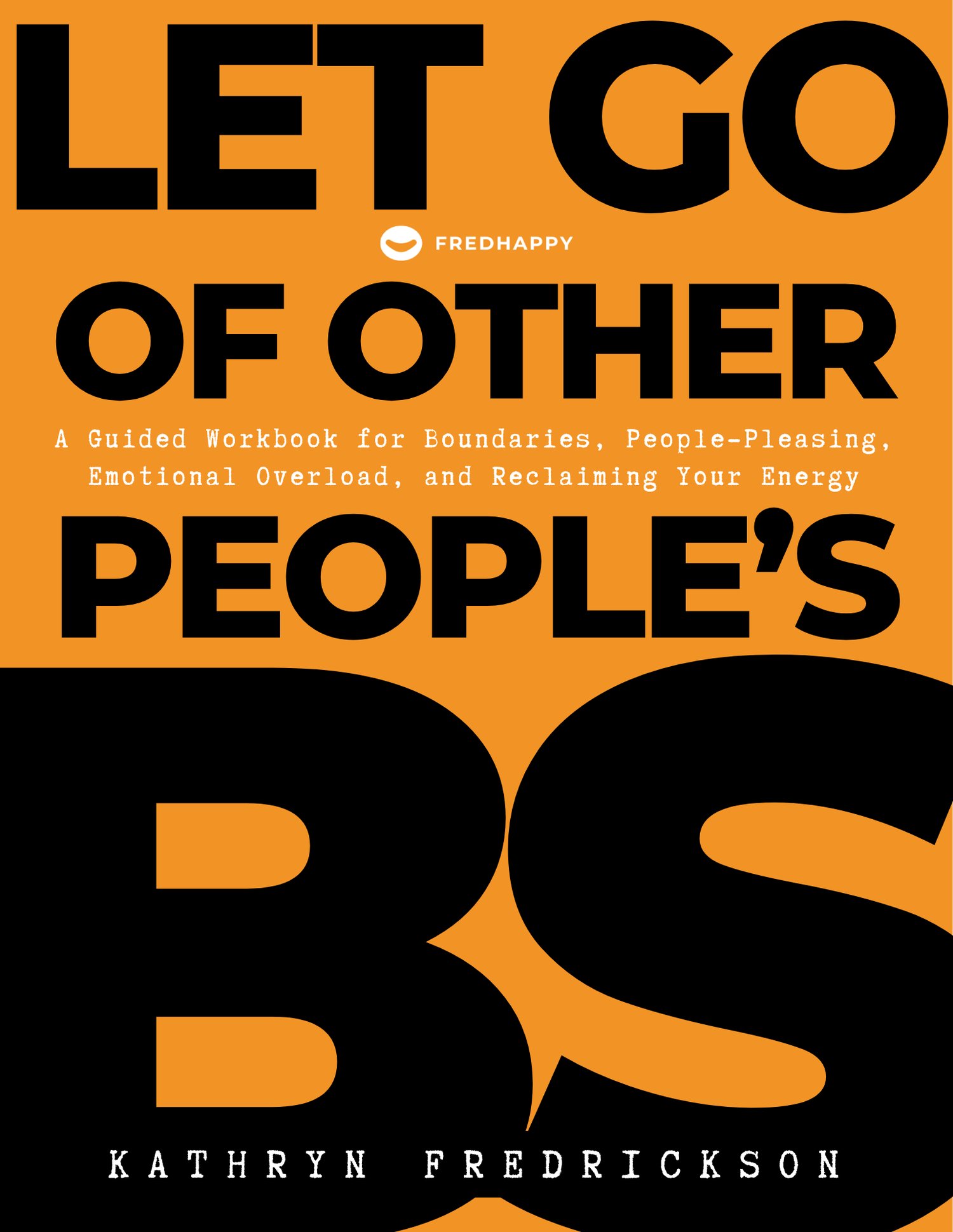
Let Go of Other People's BS is about recognizing what belongs to you and what never did. A practical guide to separating other people's expectations, judgments, emotions, and unfinished business from your own choices so you can put down what isn't yours to carry.
Grab Your Copy →


