

You can stand in a room, face arranged, voice steady, while your body is doing something else entirely.
Your jaw locks before the sentence is finished. Your shoulders climb toward your ears like they’re trying to escape. Your breath gets stuck somewhere between your ribs and your throat — technically moving, but never quite landing. Your hands find something solid: the edge of the counter, the steering wheel, the pen, the other hand. Your stomach drops a fraction of a second before your mind catches up to what was just said.
You keep talking. Or you smile. You poke your fingers through your belt loops and twist...hard. You do the thing that keeps the moment from getting worse.
Later, in the car or the bathroom or the quiet of your own kitchen, your body continues without you. Your chest stays tight. Your legs feel strangely far away. You replay the conversation on a loop, except your body is still reacting to the original version — the one that actually happened, not the polished one you’re now editing in your head.
You say it out loud, eventually:
“I’m fine.”
Your sternum does not agree.
Your Body Notices Nervous System Dysregulation Before Your Mind Does
This is the part most people never name — the way the body keeps score in real time while the face performs competence. The way your nervous system can be in full preparation mode (fight, flee, fawn, or freeze) while you’re still managing to ask someone if they want more coffee.
- The teenager who laughs at the cruel joke so no one sees how much it landed.
- The parent who finishes making dinner with their jaw clenched so tightly their teeth ache by the time the plates are on the table.
- The person who says “No worries!” with such precision that no one notices their hands have gone cold.
- The one who becomes suddenly very reasonable, very calm, very accommodating — right up until they’re alone and the shaking starts.
It looks like control.
It often feels like containment.
Looking Calm While Your Nervous System Is in Overdrive
Your body is doing what it was trained to do: keep you in the room, keep you acceptable, keep the situation from escalating. It tightens what needs tightening. It numbs what’s too much. It moves you through the moment even when some part of you has already left.
And then it keeps going.
The Hidden Cost of Chronic Stress
You drive home with your hands still gripping the wheel like it might try to get away. You lie in bed and feel your heart doing that odd, extra beat it sometimes does when it’s been asked to stay quiet for too long. You wake up tired in a way that sleep doesn’t seem to touch.
This is what white-knuckling actually looks like from the inside.
It is not dramatic. It is not cinematic. It is the quiet, persistent work of staying functional while your nervous system is still braced for impact hours — or days — after the impact has already happened.
Most of us were never taught what to do with these sensations except override them. Push through. Keep going. Be the one who can handle it. So we got very good at that. We learned to treat the body’s signals as background noise, or as evidence that we were overreacting, or as something to be managed until the moment passed.
When Your Body Never Gets the Message That It's Over
It keeps preparing. It keeps tightening. It keeps scanning for the next thing that might require the same level of containment. And over time, the cost of that containment starts to show up in places that have nothing to do with the original conversation: sleep, appetite, the ability to feel anything clearly, the strange exhaustion that comes from being “fine” for too long.
There is another way to move through these moments.
It doesn’t require becoming someone who falls apart in public or says everything they feel the second they feel it. It doesn’t ask you to stop being capable. It simply asks you to stop treating your body’s responses as the enemy of your composure.
There is a way to notice what’s happening in your body before it writes the next line of the conversation for you. There is a way to create just enough space between the surge and the reaction that you get to choose what happens next.
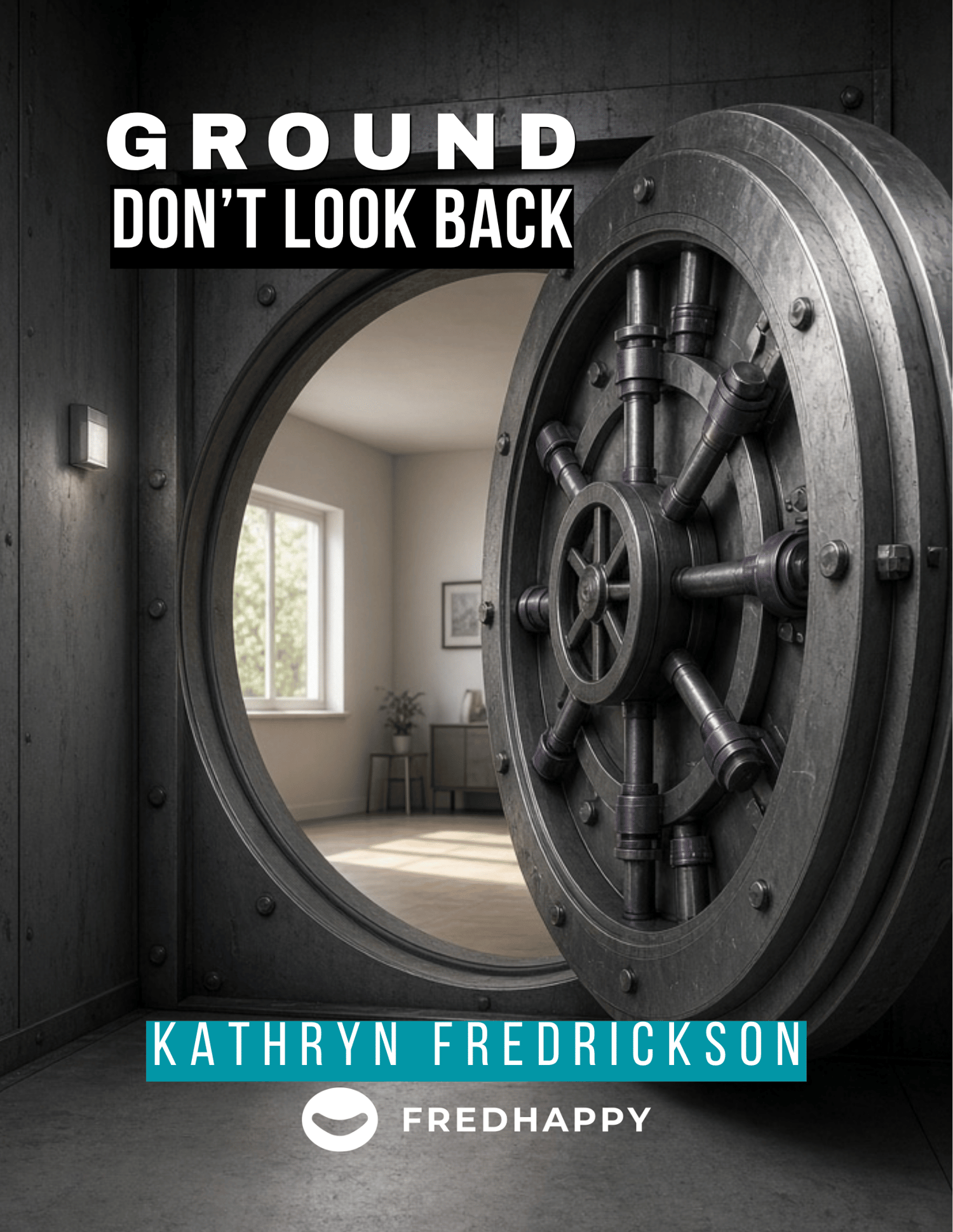
I wrote a short guide called GROUND:Don't Look Back for exactly these moments — the ones where you can feel your body doing something you don’t want it to do, but you don’t yet know how to interrupt it.
It gives you a simple, repeatable way to work with what’s happening in your nervous system in real time, without needing to explain yourself to anyone or fall apart to prove you’re paying attention.
You don’t have to keep white-knuckling your way through every difficult interaction. You can learn to stay with yourself instead. And it’s designed to be used in the actual moments when your body is already telling you something is happening — whether or not anyone else can see it.
If that sounds like something you’ve been looking for, you can get the guide here:
RECOVER
PTSD GROUND
Don't Look Back
A concise grounding guide for interrupting backward pull, orienting to the present, and returning attention to the ground beneath you.


