

Why Healthy Leadership Protects Human Capacity
We usually think of injustice as a moral problem. It certainly is. It is also a performance problem, a leadership problem, and a stewardship problem because injustice changes what work becomes.
Work Is Meant to Become Something
Every healthy system is designed to convert effort into something useful. A beehive converts nectar into honey. A school converts teaching into learning. A hospital converts knowledge into healing. A business converts skill, time, and cooperation into products and services that improve people's lives.
Healthy systems are remarkably efficient because most of their energy moves toward a common purpose. People solve problems, share information, teach one another, and improve over time. The work becomes something larger than the effort that created it.
Injustice interrupts that conversion.
How Injustice Interrupts Human Capacity
Instead of building, people begin protecting themselves. Instead of asking better questions, they begin calculating risk. Instead of sharing ideas, they wonder whether those ideas will be used against them.
The organization may still look productive from the outside, but a growing percentage of its energy is no longer creating value. It is simply trying to survive itself.
Research on workplace bullying and related forms of mistreatment has found that 30% of employees report experiencing these behaviors during their careers. The exact percentage varies by study and by how the behavior is defined, but the pattern is consistent: this is not a rare organizational failure. It is a recurring human one.
The cost is rarely measured accurately.
Organizations count turnover. They count sick days. They count legal expenses. They count lost customers and declining profits.
When Survival Replaces Contribution
What they often fail to count are the ideas that were never shared, the leaders who quietly left, the trust that slowly disappeared, and the years of experience that walked out the door because the environment stopped being safe enough for good work to flourish.
This is why personality disorders, coercive control, chronic manipulation, and workplace mobbing deserve serious attention. These patterns are not simply interpersonal disagreements.
The Question Every Leader Should Ask
They change the operating conditions of an entire group. One person's manipulation can become twenty people's distraction. A culture of intimidation quietly taxes everyone who enters it.
A healthy hive does not waste its season fighting itself. Its energy is spent gathering, building, feeding, repairing, and preparing for what comes next. That is why the image of the hive has endured for centuries. It reminds us that the purpose of work is not endless activity. The purpose of work is transformation.
The question every organization should ask is not simply, "Are people working hard?"
The better question is, "What is their work becoming?"
The Hidden Cost of Organizational Failure
If the answer is fear, confusion, silence, or constant self-protection, the problem is not a lack of effort. The problem is that injustice has begun converting human potential into organizational waste.
Good stewardship protects people because people create value. When we protect the conditions that allow honest work to mature, effort has the opportunity to become something that can nourish families, communities, organizations, and generations.
Why Leadership Is a Stewardship Role
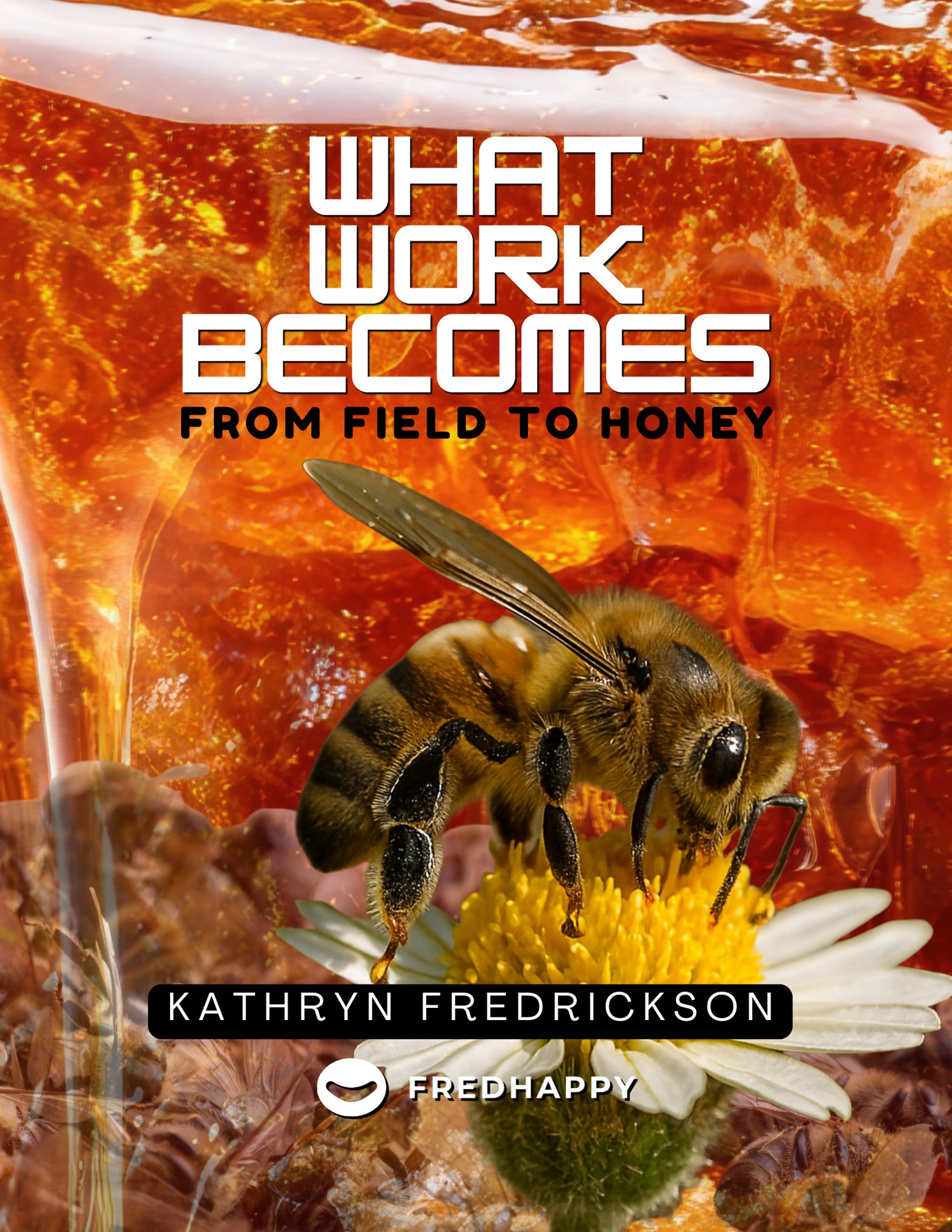
That is the journey explored in What Work Becomes: From Field to Honey. Through the life of a hive, the story asks a deceptively simple question: What happens when work is allowed to become what it was always meant to be?
If you're trying to understand the human dynamics that derail healthy organizations, the Fredhappy Workplace Mobbing explores the patterns of manipulation, group behavior, and organizational failure that too often prevent good work from becoming its full potential.
PROTECT
INJUSTICE: What Work Becomes
From Field to Honey
What happens when the energy for making must go into defending? Told from within a honeybee colony, this work of literary nonfiction explores how pressure changes work, revealing the hidden labor of preservation, adaptation, and building something that lasts.


