

Forgiveness Is Carrying Too Much
People are often told that forgiveness will set them free. There is a reason this practice appears across spiritual and cultural traditions: forgiveness can loosen resentment and shed layers of emotional charge that keep a wrong organizing your attention.
Forgiveness is also a heavily loaded word. It may be used to mean emotional release, absolution, reconciliation, restored trust, renewed access, erased consequences, or a spiritual obligation to feel differently before you are ready.
Those are not the same acts.
You can release resentment without declaring the harm acceptable. You can forgive someone without trusting them again. You can wish them no harm while maintaining no contact. You can stop demanding that the past become different without reopening a door that needed to close.
Forgiveness can be real, important, difficult, and unfinished. Anger returning does not prove that your earlier release was false. Another layer of the injury may have become available to feel, understand, and set down.
The useful work beneath forgiveness deserves more precise language.
The Old English Word RIHTAN
Old English had the verb rihtan, meaning to straighten, correct, direct, restore, or set right. The word did not historically describe a psychological method, but its meaning gives us a powerful image for what must happen after harm.
Think of righting a boat.
Righting the vessel does not erase the storm. It does not repair every split in the hull, recover everything that went overboard, or absolve whoever helped capsize it.
It returns the vessel to a position from which it can be directed again.
That is how Fredhappy uses RIHTAN: the work of restoring your perspective, balance, and direction after something has pulled your life off course. Forgiveness may release some of the emotional charge. RIHTAN asks what becomes possible as that charge begins to loosen.
You do not control the river. You decide what to do with the vessel.
When the past keeps replaying, CLOSURE helps you leave the movie.
Something painful ends, but your mind keeps producing new versions of it. You replay what happened, rewrite what you should have said, imagine the apology or reckoning that would finally settle it, and prepare for another injury before it occurs.
CLOSURE calls these productions mental movies: repeated inner scenes that keep an unresolved event active long after the original moment has ended. The other people may have left the room, but some part of your attention is still answering them.
The movie may look like reflection, investigation, preparation, or problem-solving.
CLOSURE shows you why these movies consume so much attention and how to end your participation in the loop. It also introduces RIHTAN, a more precise way to describe the release and restoration that help you return to your life.
RIHTAN Returns the Present to You
After harm, attention can remain organized around what happened. You keep monitoring, proving, rehearsing, checking, defending, or waiting for information that might finally make the ending feel complete.
The mental movie promises that one more screening will deliver relief.
Sometimes an explanation, apology, consequence, or final conversation genuinely helps. The trouble begins when your life must wait for one of them to arrive.
Closure is the end of your participation in an unresolved loop. It does not require the past to become reasonable. It means the unfinished parts are no longer entitled to unlimited access to your attention.
RIHTAN begins when you notice that you have been pulled back into the movie and recognize that the scene is not the whole of your life. You may still feel grief, anger, longing, or regret, but those feelings no longer have to direct what happens next.
The goal is not to become untouched by what happened. The goal is to stop being organized around it.
You Can Carry the Truth Without Carrying the Loop
The past remains true. The harm may still matter, and some consequences may never be repaired. RIHTAN does not require you to turn the injury into a blessing or manufacture gratitude for what it cost you.
It asks a harder and more useful question: How much of yourself will you continue to give the past?
Not none. The past may have formed knowledge, boundaries, language, discernment, and a clearer understanding of what you will no longer accept.
But it does not automatically receive your whole attention, your body, your work, your relationships, or the life still waiting to be lived.
Find out how you can keep the truth without keeping the projector running.
RIHTAN is introduced in CLOSURE, a Fredhappy field guide for ending your participation in unresolved loops. The book examines the explanations, apologies, justice, and final conversations that can matter without setting us free, then turns toward release and the practical work of leaving the movie.
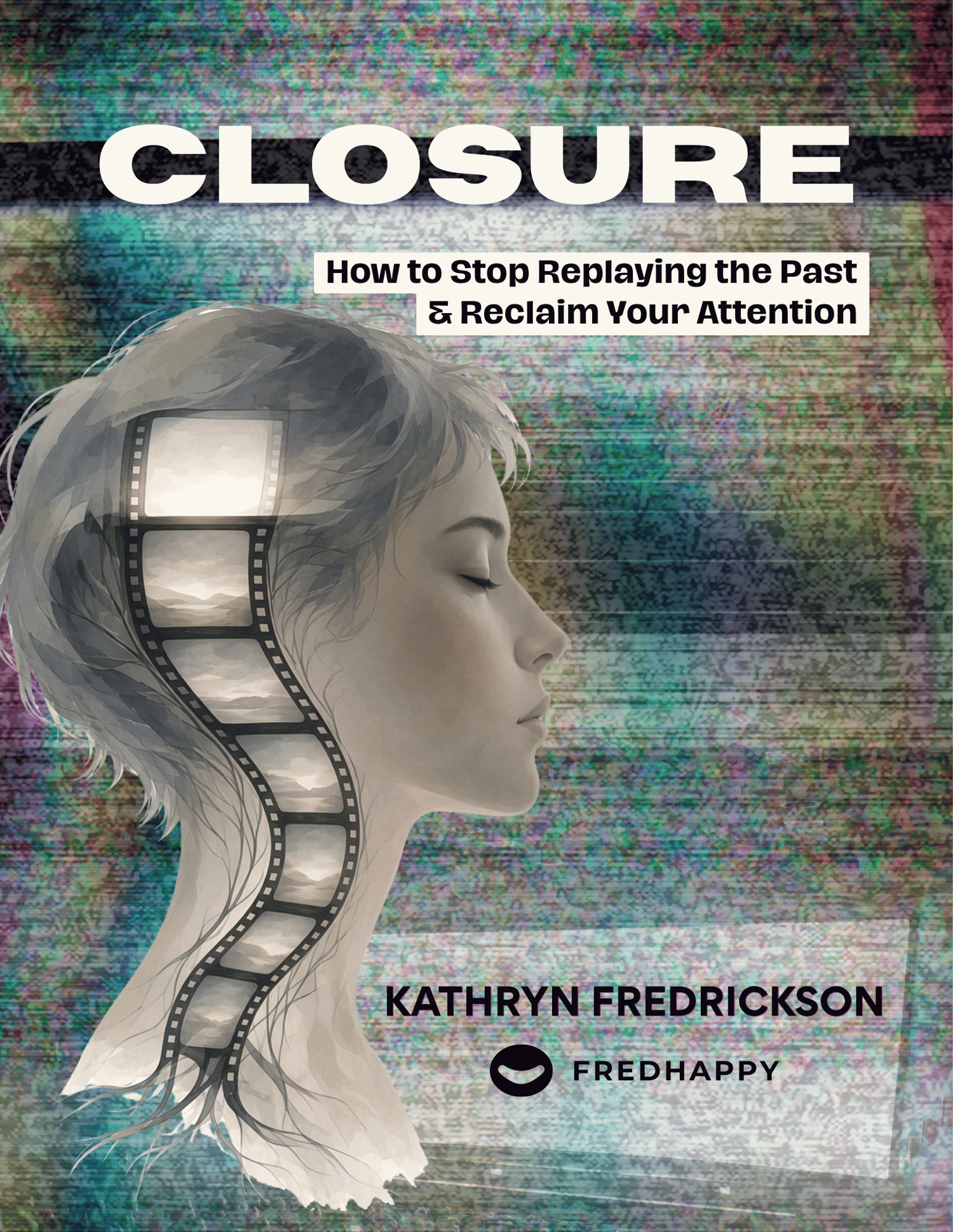
CLOSURE
How to Stop Replaying the Past and Reclaim Your Attention
Name the mental movie, interrupt the unresolved loop, and return your attention to the life happening now.


