

Why We Wrote Degrees of Visibility: Modern Exposure
The smell came first.
It was not the smell of rain on warm stone. It was not the smell of mud after the long rain, nor the smell of crushed grass beneath heavy bodies, nor the slow rot of leaves at the edge of the pond. It was sharp. It stayed in the nose even after the wind changed. It did not belong to any season.
Then the ground began to change.
Large hard creatures came and tore at the grass with their mouths. They did not eat it. They pushed it aside and left long wounds in the earth. The wounds did not heal. They darkened and hardened and began to smell like the first smell, only stronger.
I waited many cycles of the moon before I approached the edge of one. The surface was hot even when the air was cool. Nothing grew there. Nothing moved across it except the rolling ones.
The rolling ones do not sleep.
They come in lines, one after another, day and night. Their eyes are too bright. Their voices are too loud. They move faster than anything that walks or runs or flies should move.
When one passes, the ground shakes under my shell. When many pass, the air itself seems to tremble. I have seen smaller creatures try to cross while the rolling ones are moving. Most do not reach the other side.
I still know the pond.
I can smell the water when the wind comes from that direction. I can feel the cooler air that gathers above it at night. I remember the way the mud feels under my feet when I finally reach the shallows. The nesting ground still calls in the old way, the way it has always called. The desire to move between them has not left me.
What has changed is the space between.
Many of us have begun to move differently now. We wait longer at the edge. We pull our heads back sooner. We choose smaller moments, narrower paths, times when the rolling ones are fewer. Some of us have stopped crossing altogether. We stay in one place and tell ourselves the water is not so important this season.
The others notice.
They say we have become strange. They remember the old crossings and assume the ground is still the same.
They say we are slower than we once were. They do not say the ground itself has become strange. They do not say the air tastes different. They do not say the old path no longer leads where it once led.
I do not think anything is wrong with my shell.
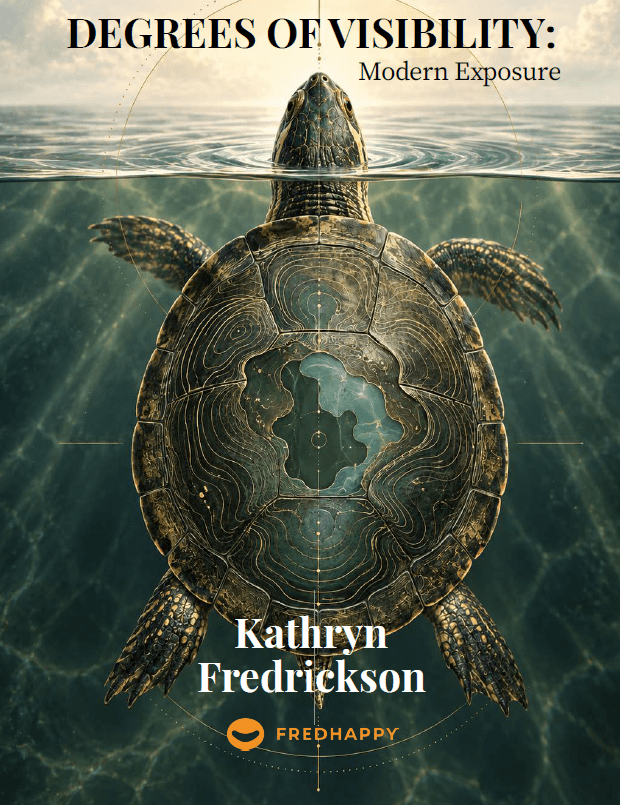
My shell still does what it was made to do. It keeps the soft parts safe when something moves too close. It lets me pull inward when the sound of the rolling ones grows too loud. It lets me wait.
The waiting is not weakness.
It is what happens when a body learns that the old way of moving will end it. The pond did not move. The nesting ground did not move. Only the space between them became something no shell was built to survive unchanged.
I still want the water. I still know how to find it.
I am only learning, slowly, that the crossing now requires a different kind of attention than it once did. Not more fear. Not less desire. Only a new way of reading the ground before each step.
The machines do not care that we are still here. The rolling ones do not slow for us.
But the water remains. And so do we.
Degrees of Visibility
A strange and practical field guide to being seen, protecting what matters, and expanding without leaving yourself behind.


